

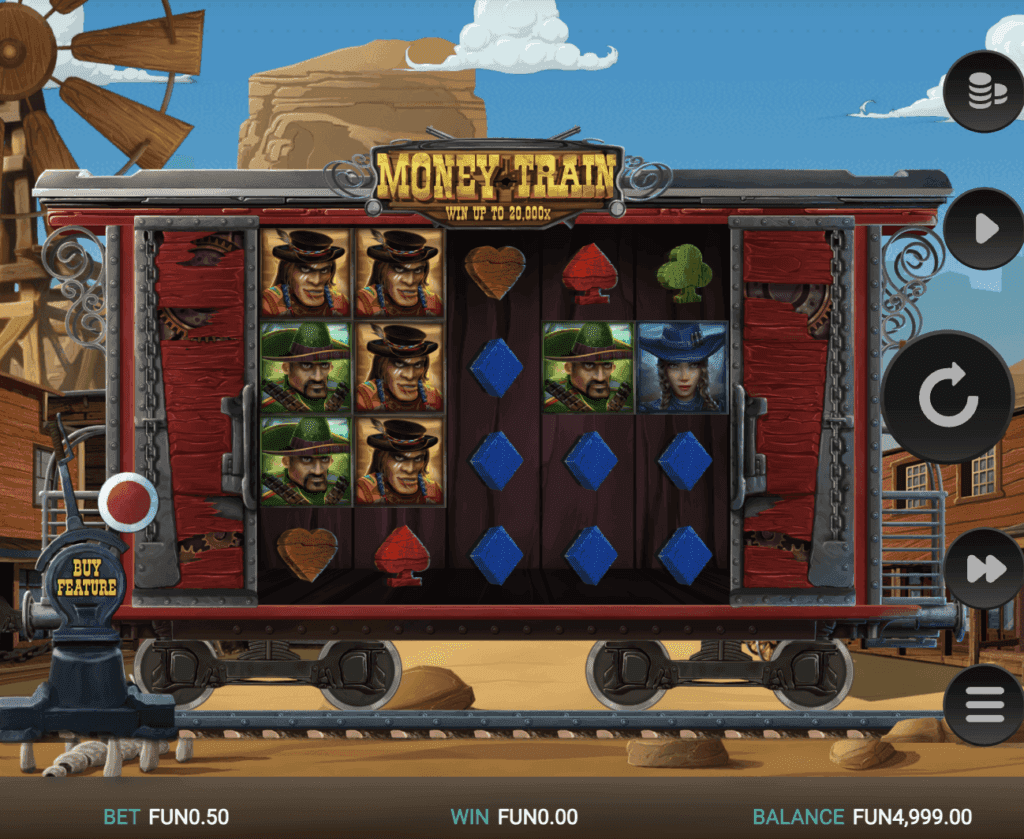
I’ve been to numerous gaming conventions, but I still wasn’t ready for the scene at a major UK convention. Right there, tucked between VR rigs and esports stages, was a slot money train 4 mobile version machine pulling in a nonstop audience. The whole thing seemed absurd. A convention bursting with narrative epics and technical marvels, yet the biggest buzz came from a game about robbing a train. This wasn’t just a cabinet with a screen; it was a social hub. Every spin became a shared event, a shared moment of hope and disappointment. I had to figure out why. What was it about this slot, in this place, that created more raw excitement than some of the AAA titles on display?
Common Questions
What is Money Train 4?
Money Train 4 is a very volatile online slot from Relax Gaming. It’s recognized for its Western-steampunk theme and a intricate bonus round where ongoing multipliers and symbols can lead to massive payouts. It’s the 4th game in a popular series famous for its compelling “hold and respin” mechanics and high risk, high reward style.
Why was it ironic to see it at a gaming convention?
The irony operated on a few levels. A game about a chaotic “money train” formed an organized queue. A product created for digital screens thrived inside a tangible cabinet. And in a hall full of sophisticated video games, a slot machine emerged as the social hub. It highlighted the unforeseen meeting point of iGaming and mainstream gaming culture.
How exactly does the Money Train 4 bonus round work?
Once initiated, you begin with 3 respins. Landing special symbols, like Collectors, Multipliers, or Payouts, resets your respin count back to 3. The goal is to fill the grid with these symbols. Multipliers can grow and merge, while Collectors gather all shown cash values. The round continues until you run out of respins or activate the ultimate Money Train symbol for the top rewards.
Is Money Train 4 only offered in the UK?
No. Money Train 4 is a slot accessible to players across the globe. Its presence at a UK convention was for marketing. Players can find it through online casinos that carry Relax Gaming’s titles, based on their local gambling laws and the casino’s selection.
What makes it different from other slot machines?
The main difference is the persistent feature system. Symbols like Multipliers and Collectors can stay on the reels across multiple spins, growing value for a potential bonus round payoff. This builds a strategic, developing narrative instead of offering isolated, random spins. It feels less like a luck test and more like figuring out a puzzle or progressing through a video game level.
How did the cabinet version compare from the online game?
The core game and its mathematical model were identical. The difference was all in the feel: the physical interface, the immersive cabinet screen and sound, and, crucially, the social atmosphere of public play. The game itself was the same, but the context made every emotion stronger and every result feel more meaningful.
Can I play Money Train 4 for free?
Yes. Many online casinos provide a “demo mode” or “play for fun” version of Money Train 4. This allows you to test the game mechanics and features using virtual credits, without risking real cash. It’s an ideal way to master the complicated bonus round before you opt to play with real stakes.
Brand Visibility and Brand Alignment
That Money Train 4 cabinet wasn’t just placed out of thin air. Relax Gaming’s move was clever. In a space focused on the cutting edge of gaming culture, showcasing a premier slot achieved several goals. It created a bridge between the iGaming world and the broader gaming community, making the case that modern slots are complex, feature-rich games deserving of a gamer’s attention. It created powerful, hands-on brand exposure. For countless attendees, this was their first encounter with a Relax Gaming product. The powerful, engaging experience of Money Train 4 built a strong, positive link to the brand. It was a declaration: “We have a place here.” The connection between the convention’s high-energy vibe and the slot’s high-stakes drama was flawless. What could have been a simple marketing stunt transformed into a genuine fan moment.
Player Reactions and Anecdotes
The stories around the cabinet were as unpredictable as the game. I chatted with one woman who hit the bonus on her third spin. She observed, completely mute, as her multiplier exceeded 100x. Her shout of shock attracted even more spectators. Another player, a self-described series veteran, spent twenty minutes carefully building the board, only for the bonus round to fizzle out early. He offered the cabinet a friendly slap, laughed, and said, “That’s the volatility for you!” with a wide grin. These weren’t cold exchanges. They were emotional rides. The cabinet became a stage for victory and a space for disappointment. The phrase I caught most wasn’t “I won.” It was “Did you SEE that?!” This focus on the spectacle over the prize was the heart of its success at the convention.
An In-Depth Look at Money Train 4’s Mechanics
To grasp why gamblers were so engaged, you have to look under the hood. Money Train 4 isn’t a simple three-reel spinner. It’s a slot constructed around a story, where the core game is just the setup. Everything pushes toward the Bonus Round, the true heist. The draw is the “persistent feature” system. Symbols like Collectors collect cash values. Multipliers stay fixed place and can grow. Payout symbols burst onto the screen. These don’t just vanish after a spin; they can persist, creating a narrative where the stakes keep escalating. The main event is triggering the Money Train Bonus. You receive three spins to begin, and hitting special symbols earns you more. It’s a intense puzzle, a fight against the game’s own volatility. On a big cabinet screen, every decision feels monumental. You quit being a passive player and start sensing like the leader of your own chaotic, potentially lucrative, train robbery.
The Appeal of Persistent Features
Persistence is paramount. In the majority of slots, each spin is a clean slate. Here, your moves have repercussions. Hit a Multiplier and it remains, its value possibly increasing. A Collector symbol gathers all the cash values on screen. This generates a building phase. You’re not just waiting for luck to arrive; you’re assembling the tools for a future payoff. The screen turns into a active battlefield. The tension stems from almost succeeding, from observing your potential prize develop with painful slowness. This mechanic grabs you and doesn’t let go. Players aren’t just hitting a button. They’re scheming, longing, and engaging emotionally in the symbols in front of them. When the bonus round finally erupts into action, it appears like the reward for a plan you contributed to build.
The Unforeseen Centerpiece
The convention floor was its typical chaotic self. Screens blasted trailers, music emanated from every direction, and cosplayers moved through the crowds. Then I found a pocket of quieter, focused energy. People weren’t facing outward; they were gathered in a circle, looking in. At the center was the Money Train 4 cabinet. Its striking, steampunk artwork stood out against the neon glow. The sound—a unique mix of clanking metal, a revving engine, and tense music—didn’t drown out the room. It carved out its own space. “Meet me at the Money Train” turned into a practical waypoint for friends. In that hyper-digital environment, the cabinet appeared as a relic, and that was its strength. It offered something physical: the pull of a lever, the solid click of a button, the collective gasp of a crowd. That tangible experience built a sense of community no handheld controller ever could.
The Reason a Slot Machine Stole the Show
This wasn’t a fluke. Money Train 4, from Relax Gaming, is already a legend online thanks to its unpredictable, feature-heavy design. Seeing it in a physical cabinet showcased those complex mechanics on full display. Seeing the reels lock for the bonus round, spotting multipliers stack on the screen, catching the audio swell as the Money Train arrived—it was pure theater. The game converted cold math into a gripping performance. For plenty of people in line, this was their first chance to witness the game’s notorious potential play out right in front of them. The digital myth became something concrete you could touch, and the tension was palpable.
Analyzing Digital vs. Physical Play
I’ve played Money Train 4 online plenty. The cabinet version was a distinct beast entirely. The differences were pronounced and significant.
- The Hands-On Experience: Online, you tap a mouse. At the cabinet, there’s a process. You feed a ticket, experience the weight of the spin lever or the precise click of the button, hear the reels stop. It’s a sensory engagement that makes every spin feel for more.
- Immersion and Focus: At home, your phone buzzes, the TV’s on. At the cabinet, you’re in the zone. The screen occupies your vision, the sound reaches you directly, and the crowd around you reinforces that you’re playing. This single-minded focus intensifies every win and every loss.
- The Social Multiplier: Online, a big win is for you alone. At the convention, it was a public event. The joy multiplied through the shouts and high-fives of people you’d never met. A tough loss, on the other hand, came with sympathetic nods and shared sighs, which removed some of the sting out.
Memorable Impressions and Market Implications
Weeks later, I can still imagine that Money Train 4 cabinet distinctly. It showed me that in our push toward a fully digital world, we might neglect the power of a shared, physical moment. The cabinet didn’t just offer a game to play. It provided an event to remember. This has real implications. For developers, it directs toward more hybrid strategies that bring top online games to life at public events. For convention organizers, it’s a lesson in audience taste. Core gamers have a latent desire for well-designed, skill-testing slot experiences. The slot’s success was a signal. Deep engagement doesn’t require a fifty-hour campaign. It can come from a five-minute, high-stakes session just as easily. The “money train” that left the station at that convention was carrying more than pretend cash. It was carrying a lesson about what makes people gather, watch, and cheer together.
The Societal Impact of Queue Culture
The truly captivating aspect might have been the queue itself. It wasn’t a miserable line. It was a pre-game lobby alive with conversation. People watched the current player with hawk-like focus, studying their choices, cheering their wins, groaning at their near-misses. Advice flowed freely. “Look for the Rascal Rings!” someone would say. “Get that Collector early if you can,” advised another. A real sense of teamwork formed among strangers. When someone finally triggered the Money Train bonus, the crowd would go quiet, then erupt as multipliers climbed or a new Respin symbol landed. That shared experience—the collective breath held and then released—was social gaming in its purest form. It was a blunt reminder that gambling, at its core, has always been a group activity. The cabinet made that reality direct and palpable, something a home computer screen simply can’t replicate.
The Study of Ironic Contrasts
The irony was striking. A creation about a rampant, chaotic money train became a steady, grounding point in the disorder of the event. A game born for online play found its most impactful expression in a real cabinet. While small indie developers fought for a moment of attention, this slot, backed by the well-known iGaming industry, commanded a crowd effortlessly. It revealed a compelling cultural blend. The design and systems of video games—continuous worlds, upgrade systems, bonus rounds that seem like “boss fights”—are now completely woven into slot design. That made a game like Money Train 4 far more appealing to a convention-goer than any old-school fruit machine could ever be. The irony wasn’t a conflict. It was a symbol of two worlds merging in the best way.